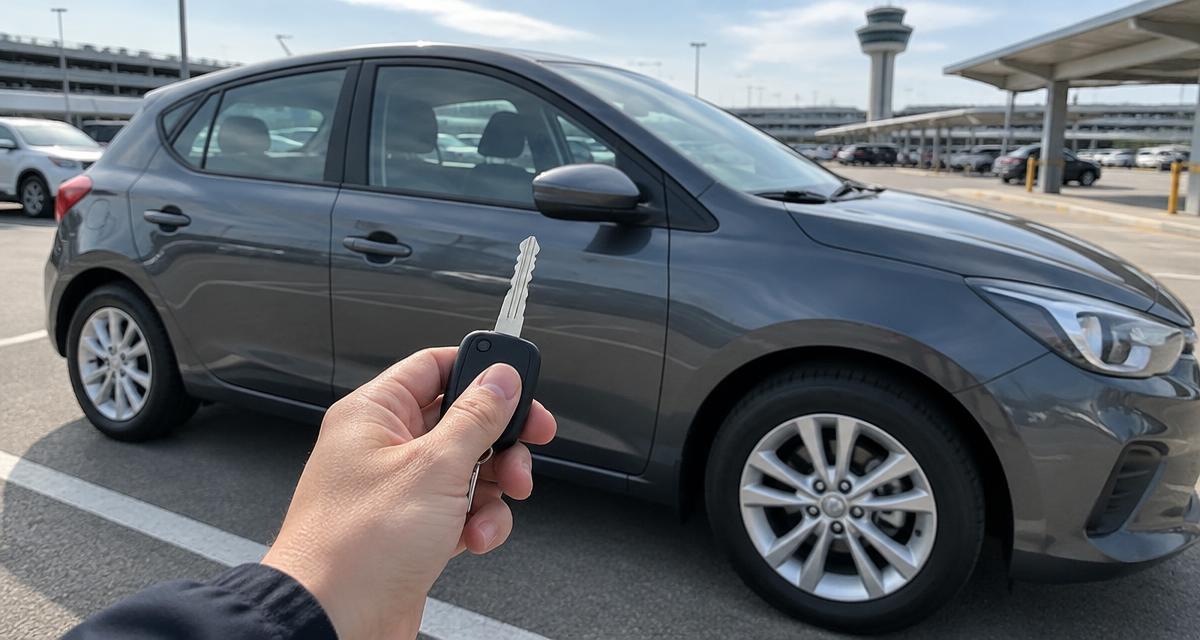
Prepare the essentials at the counter
Have your booking confirmation, driving licence and required payment card ready, and check the agreement’s driver names, dates, vehicle category and fuel terms. Compare the pickup and return times: a small time difference may affect the rental period under the supplier’s terms. Resolve discrepancies before signing or leaving the staffed area.
Ask where the car is parked and whether the desk will still be staffed when you return with a discrepancy. Decline unexplained additions until you understand their price and purpose. If the allocated vehicle differs, check luggage capacity and controls before accepting the substitution.
Walk around in good light
Inspect the exterior methodically: front, sides, rear, wheels and glass. Look for scratches, dents, chips and other marks. Photograph the vehicle from several angles and take close-ups of existing damage, with a time record if available. GOV.UK identifies damage charges as a major source of rental complaints and recommends taking steps to reduce disputes.
Include wheel rims, mirror housings, windscreen edges and bumpers, not just large body panels. Avoid climbing under the car or inspecting in moving traffic. If darkness or heavy rain prevents a reliable check, ask staff to document the limitation and explain the reporting procedure.
Make sure the condition report matches
Ask the employee to record each mark on the check-out form or digital report. Do not rely on a verbal assurance that a tiny mark is already known. Photograph the completed record and keep it. If the vehicle is in a dark or crowded area, request a better-lit inspection or ask staff to document what cannot be checked.
Keep a copy of the revised report that you can open without mobile reception. Match close-up pictures with wider views so the location of each mark is clear. Photographs support the record, but they should not replace notifying the supplier before departure.
Check the interior and equipment
Look over seats, dashboard, boot and upholstery; note stains or damage. Confirm the equipment promised in the booking, such as child seats or navigation, and test basic controls before setting off. Learn how lights, wipers, gears and parking brake work. If a warning light is on, or the car appears unsafe, tell staff and request a resolution rather than guessing.
Test seat adjustment, seat belts, lights, wipers and the parking brake while stationary. Check that any reserved child seat is present and suitable before fitting it according to its instructions. Report warning lights or an obviously unsafe tyre rather than trying to diagnose the problem yourself.
Confirm fuel, mileage and emergency process
Record the displayed fuel level and odometer alongside the contract. Clarify the required return fuel level and where to refuel. Ask how to report a breakdown or collision, what number to call and whether roadside assistance is included. Keep the contact details accessible, not buried in an email that may be offline.
Photograph the fuel gauge and odometer with the vehicle stationary. Ask which fuel the car takes and where the emergency number appears in the paperwork. Confirm who may authorise repairs or recovery; arranging your own repair without approval could complicate the rental or cover conditions.
Close the loop at return
Use the same careful approach at drop-off. Photograph the vehicle, fuel display and parking location; where possible, ask for a staff inspection and written acknowledgement. Keep the final receipt and documents until any deposit hold has cleared. A well-documented pickup cannot prevent every disagreement, but it gives both sides a clearer record of the condition at handover.
Allow time for a staffed inspection where available, and request the return report. For a key-drop return, photograph the parking location, condition, mileage and fuel level, then retain the refuelling receipt. Check the agreement for when responsibility ends rather than assuming dropping the keys settles everything.
If the inspection reveals a problem
For damage omitted from the report, return to staff before driving away and request an amended record. For an unsafe condition, ask for a replacement rather than accepting a promise to sort it out later. If you notice a problem just after departure, stop somewhere safe and contact the supplier promptly using its emergency or support process. Keep messages and names with your photographs. Never handle a phone or attempt to document a defect while driving; the inspection record is not worth creating a road hazard.
Useful sources
Rules and booking terms can change. Confirm current requirements with the official sources and your provider before travelling. This is general planning advice, not personal legal, medical or insurance advice. Suggest a correction.