Count beach days and laundry opportunities
A seven-night beach holiday needs a plan for salt, sand and drying clothes, not seven entirely separate outfits. Before making your list, confirm whether your accommodation provides beach towels, somewhere to hang wet swimwear and laundry facilities. A bathroom towel is not automatically available for beach use. Note any restaurant dress requirements and booked excursions so the clothes you take match the week you have actually arranged.
As a workable adult starting point, consider four or five lightweight tops, two pairs of shorts or skirts, one longer bottom, sleepwear, underwear for each day and a light evening layer. Add or substitute dresses if you prefer them. With reliable laundry, you may need fewer pieces; without it, allow enough clean clothing for your own comfort. Choose combinations that can be repeated rather than saving individual outfits for imaginary occasions.
Pack for swimming and the walk back
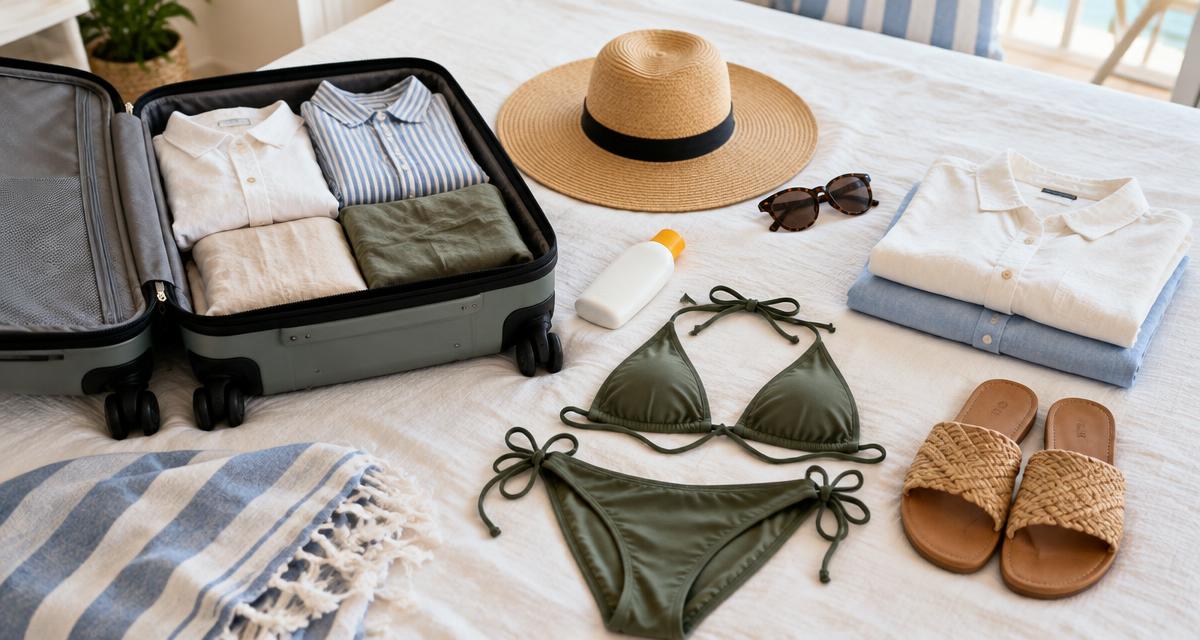
Two swimsuits are useful when one is drying, although drying conditions matter more than a fixed number. Add a cover-up suitable for walking through the accommodation, beach sandals and comfortable shoes for excursions. If a boat trip or rocky coastal walk is booked, ask the operator about footwear instead of assuming flip-flops will do. Avoid bringing a third pair that duplicates a job already covered.
Use a washable beach tote with space for a towel, drinking water and sun protection. Include a separate bag for sandy clothes or a wet swimsuit on departure day, then unpack damp items promptly after arrival home. A zipped pouch helps organise keys and a phone but is not necessarily waterproof. Check equipment hire before packing snorkelling gear, bulky beach toys or inflatables, especially if you will have to carry them through several transfers.
Give sun protection proper luggage space
Pack a wide-brimmed hat, sunglasses and clothing that covers exposed skin, rather than treating sunscreen as your only protection. The NHS recommends sunscreen with at least SPF30 and at least four-star UVA protection; it also explains the UVA-in-a-circle marking. Check the product is still within its usable period after opening. A bottle left over from a previous holiday should not go into the case without that check.
Allow for repeated applications across the whole week. NHS advice is to reapply sunscreen every two hours and straight after being in water, including when the product is water-resistant, as well as after towel drying or sweating. Follow the product instructions and do not ration application to make a tiny bottle last. Plan shade breaks when the sun is strongest; the NHS timing of 11am to 3pm refers to the UK, so check local conditions abroad.
Decide how toiletries will travel
If flying with cabin baggage only, compare your sunscreen and toiletries plan with security rules at every airport on the itinerary, including the return. GOV.UK says most airports limit liquids to containers of 100ml or less, while some permit larger containers. A partly used large bottle still counts by container capacity. Check any separate transparent-bag requirement too; creams and lotions count as liquids, not just drinks.
If the quantities you need will not fit the permitted allowance, consider suitable hold baggage or establish where you can buy the products after security or at the destination. Check shop opening times and availability rather than assuming your usual sunscreen will be waiting. Keep medicines and their supporting paperwork accessible, checking the separate official medicine rules where relevant. Limit other toiletries to products you use and seal anything likely to leak.
Prepare the first afternoon and final morning
Place a swimsuit, cover-up and the sun protection you can legally carry somewhere reachable if your room will not be ready on arrival. Keep booking details, insurance information and transfer instructions available offline. Before the return, set aside a dry travel outfit and a bag for the final swim’s wet kit. Leave enough suitcase space for repacking without forcing damp clothes against documents or electronics. Check the closed bag against your booked baggage allowance, then remove extras that have no clear role in the week.
Useful sources
Rules and booking terms can change. Confirm current requirements with the official sources and your provider before travelling. This is general planning advice, not personal legal, medical or insurance advice. Suggest a correction.